
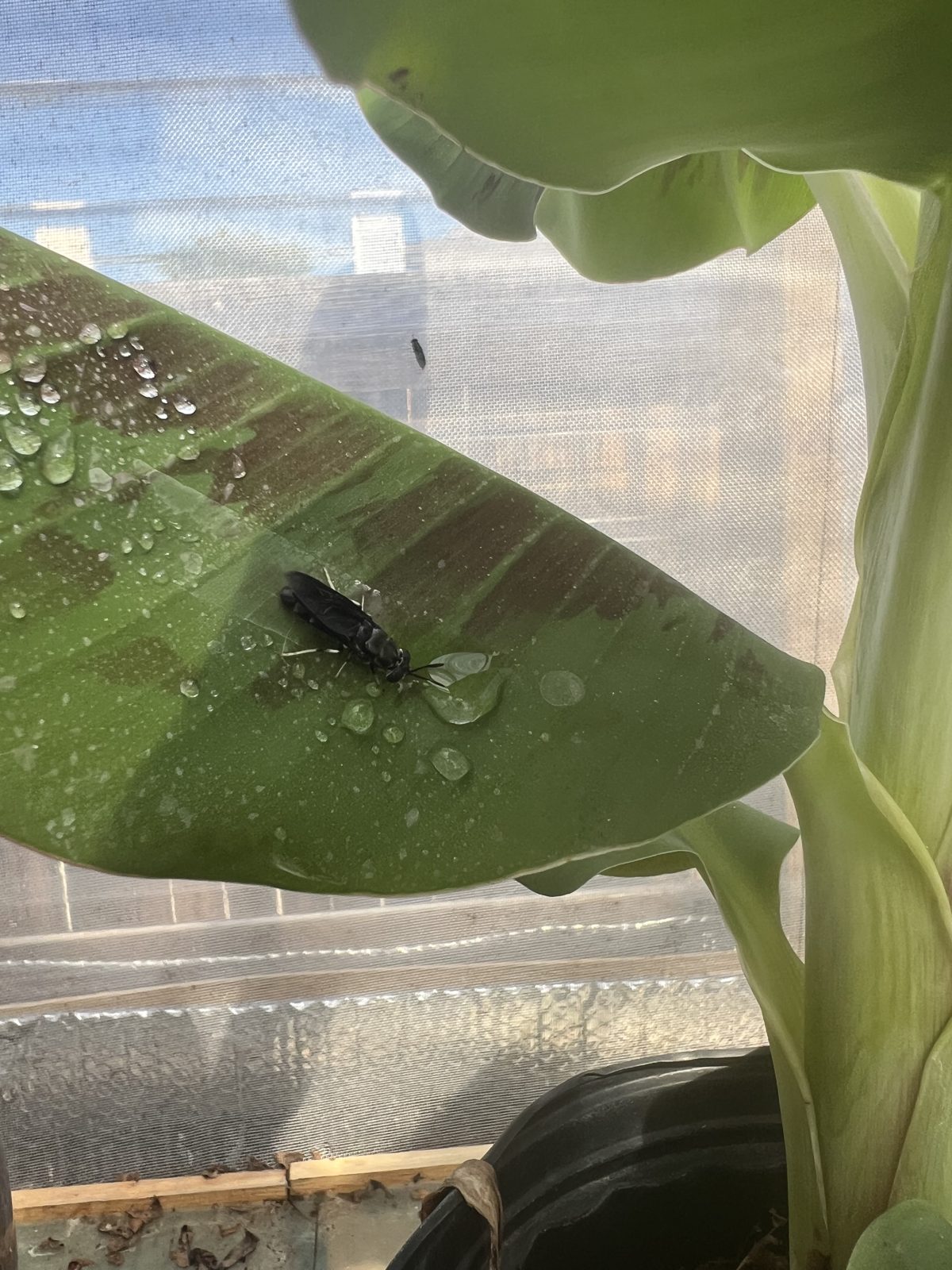
Do black soldier flies pollinate anything? I raise these things every day, I can tell you what the larvae eat, how warm the mamas like it, how long a colony takes to cycle. But what the adults do out in the world when they're not laying eggs on my bin? I had to go look it up.
The answer turned out to be more interesting than the yes or no I was expecting.

Flies pollinate way more than you think
Bees get all the credit. And they've earned a lot of it, but flies are the second most important group of pollinating insects on the planet. Research published in Current Biology found that flies visit the flowers of 72% of the world's crops.
Here's the one that got me. Chocolate. Cacao trees are pollinated almost entirely by tiny flies called midges. The flowers are so small and weird that bees mostly can't work them. No flies, no chocolate.
The pretty ones aren't doing all the work, either. A study in the Proceedings of the Royal Society looked at all the "forgotten" flies that aren't hoverflies, the ones researchers usually ignore because they're hard to identify and assumed to be unimportant. Turns out they carry pollen loads just as big as the hoverflies everyone does study. In the farmland habitats they looked at, those ignored flies were carrying an estimated 84% of all the pollen moved by flies.
So where do black soldier flies fit in?
Black soldier flies belong to a family called Stratiomyidae, the soldier flies. There are over 2,000 species of them worldwide, and the adults of many of those species spend their short lives visiting flowers and drinking nectar. They're not major pollinators like bees or hoverflies, but they're part of that quiet crowd of flower visitors moving pollen around while nobody pays attention.
Which brings up a myth I believed myself when I started: that adult black soldier flies don't eat at all.
They do. Their mouthparts are built for liquids, like a sponge, so they can't chew anything, but research going back to at least 2016 (and honestly, there's a paper from 1959 that already knew this) shows that adults will drink sugary liquids when they find them, and the difference isn't small. A 2025 study found that fed adults lived about 25% longer than adults given only water, and the females laid almost four times as many eggs in the first eight days. In the wild, the natural version of that sugary liquid is nectar. These flies are equipped to visit flowers, and it benefits them to do it.
(Side note if you keep breeding adults: this is a good argument for giving them a little sugar water. The mamas will thank you.)
The honest part
So do black soldier flies actually pollinate anything? I couldn't find a single study that measured it. Almost all the research money goes to the larvae, because the larvae are the ones eating food waste and feeding chickens. The adults are barely studied at all.
My best guess, based on what their relatives do, is that they're minor pollinators at most. They visit flowers, they drink nectar, some pollen probably sticks and moves with them. But nobody has counted, and I'm not going to pretend they're out there saving the almond crop.
The adults hanging around your bin aren't pests, though. They don't bite, they don't sting, and when they leave your yard they're not headed for your kitchen, they're living out their last week or two looking for mates and, apparently, flowers. That's the whole job.
Somebody should study it properly. Until somebody does, "probably a little" is the best answer I've got.

From the shop
BSFL Bin Kit
If reading about them makes you want to try it, the Bin Kit is where I'd start, it turns a tote you already own into a working bin.
$59.95, free US shipping
See the Bin Kit →