
Why it works

Thunder Acres
Coco Coir Bricks — BSFL Bin Bedding & Moisture Control
If your bin has ever gone soupy on you, you already know the problem. Wet substrate packed down at the bottom, no air moving through it, and the larvae climbing the walls trying to get away from it...
$12.99per variant
❋
Based in Aurora
Everything we sell has been tested in our farm to ensure quality.
☻
A short catalog
We would rather sell a few things that work than a wall of options that mostly don't.
✦
Real support
Stuck? Email us. We farm BSFL ourselves, and we'd rather help you succeed than ship you replacements.
✿
Circular by design
Insect farming turns organic waste you already have into protein and fertilizer, without a feed supply chain.
If your bin has ever gone soupy on you, you already know the problem. Wet substrate packed down at the bottom, no air moving through it, and the larvae climbing the walls trying to get away from it. Dry material mixed into the top is what fixes that, and coco coir is one of the cheapest ways to add some.
Coir is ground-up coconut husk. It ships as a compressed brick, you add water, and it falls apart into a loose fluffy medium that holds a lot of water for its weight. That's the whole point of it.
Honest note — read this part first
Coco coir has water-soluble tannins in it, and tannins are hard on larvae. A 2024 study in PeerJ tested six dry materials as moisture-control additives in BSFL bins. Coir pulled water out better than anything else they tried, and it also produced the smallest larvae of the six, with mortality at the high end of the group. The researchers didn't even list a recommended inclusion rate for it. They wrote "remove toxic substance before uses."
The fix is a hot water soak. That's it. Their larvae did fine once the coir was leached first.
So do me a favor and don't dump a dry brick straight into your bin. Soak it in hot water, pour that first water off, and squeeze the coir out before it goes anywhere near your grubs. The water that comes off is brown, that's the tannins leaving. I'd rather tell you that up front than have you wonder in two weeks why your colony stalled out.
How to use it
- Drop one brick in a bucket with about a gallon of hot water, as hot as your tap runs. Give it ten minutes.
- Pour the brown water off and squeeze the coir out. Damp, not dripping.
- Spread a thin layer over the top of the bin where the wet feed is, or work a little into the substrate if the bin is running wet.
- Thin layer. Coir pith is a fine particle, so a deep packed layer chokes off airflow at the bottom, which is the exact thing you were trying to fix.
Start light and add more if the bin is still too wet. It's easier to add than to take back out.
What you get
- Compressed coco coir bricks, 1.5 lb each, sold from a single brick up to pallet quantities
- Expands up to 8 times its compressed size, roughly 2.1 gallons of loose coir per brick (about 3.5 bricks to a cubic foot)
- Coconut husk pith, a renewable byproduct of coconut processing
- OMRI Listed for organic use, Thunder Acres, OMRI ID thu-7963. That listing is for crop and container media, not animal bedding, so we're telling you what it covers rather than stretching it.
For scale, one brick spread across a 27 gallon tote is about an inch and a quarter deep. That's more than you'd want in one go. A brick goes further than people expect when you're using it right.
What it isn't
It isn't feed. Coir is inert, the grubs get no nutrition out of it at all. It's there to manage water and give them a medium to move through. Feed them scraps.
It also isn't sterile, and nothing about coir is. It carries a live microbial load. That's fine in an open outdoor bin, just don't buy it thinking you're getting a clean-room material.
Who it's for
Anyone running an open bin that fights moisture. If you're feeding a lot of wet kitchen scraps, or if your bin sits somewhere it catches weather, or if you're just tired of the bottom of the bin turning into sludge — a dry material on hand is what saves you. And when the grubs are finished, the coir comes out with the frass and goes on the garden, so you're not throwing it away at the end.
Common questions
Can you use coco coir as bedding for black soldier fly larvae?
Yes, but rinse it first. Coco coir is very good at absorbing excess moisture in a BSFL bin, but it contains water-soluble tannins that are toxic to larvae. Soak the brick in hot water, pour off the first water, and squeeze it out before adding it to the bin. Use it as a thin top layer rather than a bulk portion of the substrate.
Do you have to rinse coco coir before putting it in a BSFL bin?
Yes. Unrinsed coco coir raised larval mortality and reduced larval size in a 2024 PeerJ study of moisture-control additives. Leaching it with hot water before use removes the tannins responsible. Soak the brick, discard the brown first-soak water, and squeeze the coir out until it is damp but not dripping.
Is coco coir food for black soldier fly larvae?
No. Coco coir is inert and non-nutritive. It is a bedding and bulking material used to absorb moisture and give larvae a medium to move through. Black soldier fly larvae need an actual feedstock such as food scraps or spent grain.
How much does one coco coir brick make?
Each 1.5 lb brick expands up to 8 times its compressed size, yielding roughly 2.1 gallons of loose coir. About 3.5 bricks make one cubic foot.
How much coco coir should you add to a BSFL bin?
Use a thin layer over the top of the wet feed rather than mixing in a large proportion. Coco coir pith is a fine particle, and a thick packed layer restricts oxygen at the bottom of the bin. Start with a light application and add more only if the substrate is still too wet.
Is this coco coir organic?
It is OMRI Listed for organic use under Thunder Acres, OMRI ID thu-7963. That listing covers use as crop and container media. OMRI lists products, it does not certify or approve them.
40× more calcium than mealworms
BSFL have a calcium-to-phosphorus ratio ideal for reptiles, amphibians, and birds — one of the only feeder insects carrying more calcium than phosphorus.
Self-harvesting
When prepupae are ready to pupate, they climb up and out of the bin on their own. You collect them dry and clean.
Two things out of one bin
BSFL eat your kitchen scraps. The frass they leave behind is a rich organic fertilizer for the garden.
An open outdoor system
A BSFL bin lives outside in the shade with wild flies coming and going. Airflow and moisture do most of the work.
Ready to close the loop?
Turn the scraps you already have into food for your animals.
Also from Blue Grub
Want something different?
Flagship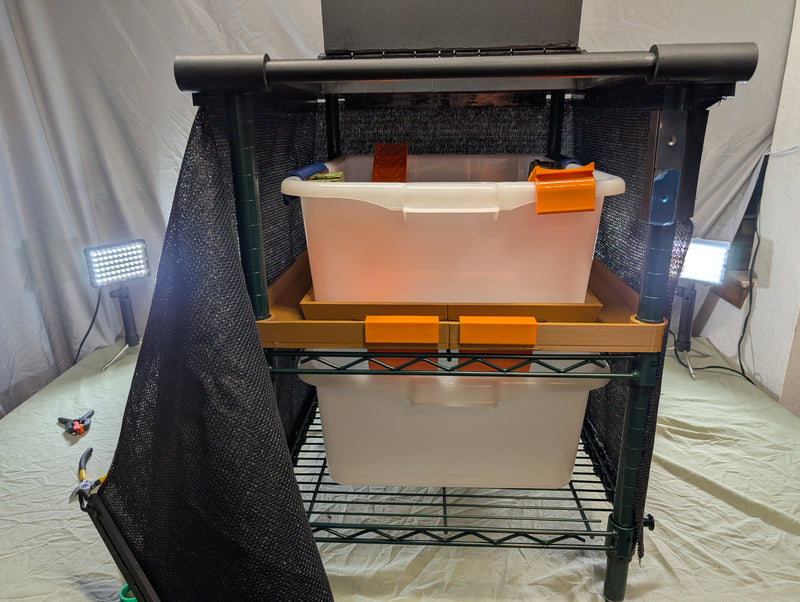
BSFL Bin
The Grubhouse — Premium BSFL Bin system
The Grubhouse is a complete black soldier fly larvae (BSFL) rearing and self-harvesting system for backyard chicken k...
$350.00
In stock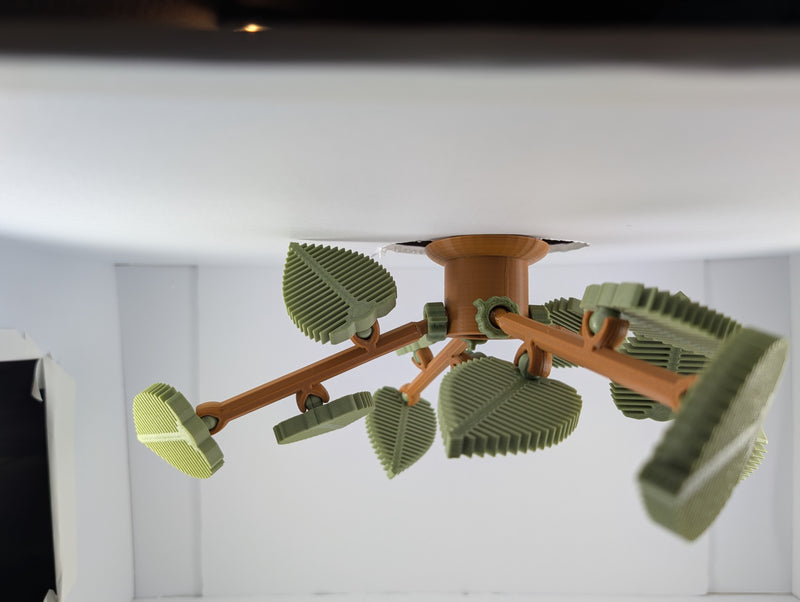
BSFL Starter Kit
BSFL Bin Kit — Black Soldier Fly Larvae Starter Kit
Free US shipping. Bin not included — the kit fits any plastic storage tote you already own. Build your bin your way....
$59.95
In stock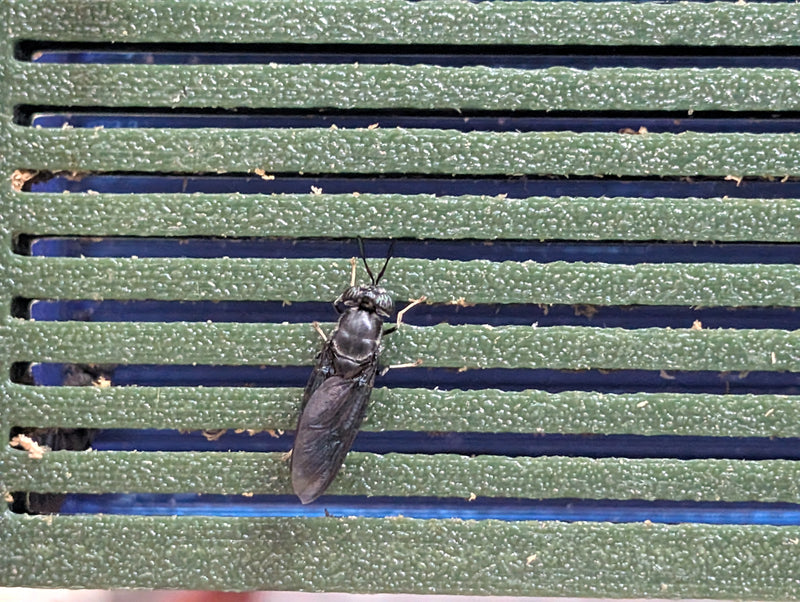
BSFL Breeding Equipment
BSFL Coop — Black Soldier Fly Egg Collection System
When we started farming Black Soldier Flies, we found that egg collection can be a bit annoying, there was not an eff...
$99.99
