
Why it works
Blue Grub Farms
The Grubhouse — Premium BSFL Bin system
The Grubhouse is a complete black soldier fly larvae (BSFL) rearing and self-harvesting system for backyard chicken keepers, reptile owners, and composters, built by hand in Aurora, Colorado. It is...
$350.00
❋
Based in Aurora
Everything we sell has been tested in our farm to ensure quality.
☻
A short catalog
We would rather sell a few things that work than a wall of options that mostly don't.
✦
Real support
Stuck? Email us. We farm BSFL ourselves, and we'd rather help you succeed than ship you replacements.
✿
Circular by design
Insect farming turns organic waste you already have into protein and fertilizer, without a feed supply chain.
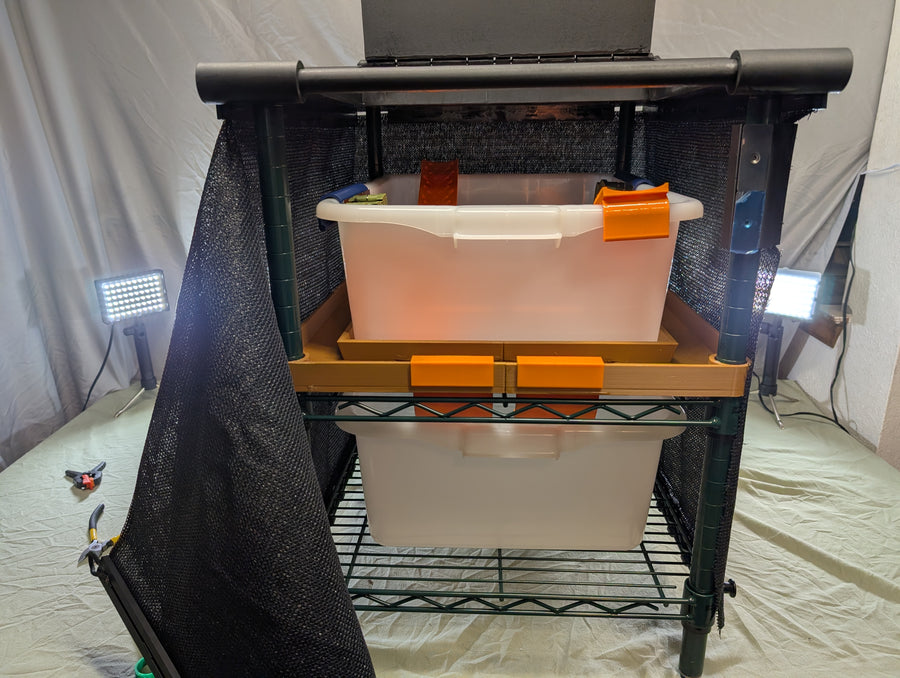
The Grubhouse is a complete black soldier fly larvae (BSFL) rearing and self-harvesting system for backyard chicken keepers, reptile owners, and composters, built by hand in Aurora, Colorado. It is a steel-frame habitat with breathable shade-cloth walls, a perimeter Grub Track that collects self-harvesting larvae into a lower tub, and magnetic egg surfaces, sold built-to-order for $350.
If you keep chickens, you know what you spend on feed. Or if you keep reptiles, you know how fast a cup of feeders goes and what the next one costs. Or if you're composting, you know a pile takes months to turn into anything you'd actually put on a garden.
Black soldier fly larvae do all three at once. They go through food scraps faster than anything else I've found, the fat little grubs that come out the other end run roughly 40 to 50 percent protein by dry weight, and what's left behind is frass, which is a solid soil amendment you didn't pay for.
The Grubhouse is a complete black soldier fly larvae system. A full habitat, built and ready, so you can do all of that without building the thing first.
Because keeping them alive is the hard part.
I started with an old 27 gallon tub. Then a better tub. Then a tub with holes drilled in it and a ramp taped to the side. They all went the same direction. Moisture builds up, the substrate goes anaerobic, it starts to smell like something died in there, and the colony crashes or leaves. I don't think that's people doing it wrong. A plastic tub can't breathe, and that's most of what went wrong every time.
The Grubhouse is what I built so people won't have to do that.
The Grubhouse is built to order. Allow 3 to 6 weeks for delivery.
I build each one by hand, so yours gets started when you order it. If anything pushes your build past that window, I'll email you before it does, and you can wait for the new date or take every dollar back, no hassle.
Shipping is $75 flat in the lower 48, added at checkout. It ships in one box. I'd rather you see that number here than get surprised by it later.
Along the Front Range? Delivery and setup are free. Fort Collins down to Colorado Springs, Denver metro and the near plains in between. Pick "Front Range delivery and setup" at checkout and it takes the shipping charge off. I'll bring it out myself, put it together in the shade spot you picked, and make sure it's running before I leave.
Walls that breathe
The walls are shade cloth stretched over a frame, so air moves through the whole thing instead of sitting in it. Every tub I built died wet, and that's the problem I set out to fix first. It's most of the reason I bothered building this at all.
Less nasty means less dangerous
This part matters and I don't think enough people talk about it. When a plastic tub goes anaerobic — and they all do, eventually — it's not just unpleasant. That's the environment where bacteria like Salmonella and Clostridium actually thrive. Stagnant, wet, no air moving through. The Grubhouse keeps air flowing across the substrate constantly, so those conditions don't really get a chance to set in. I'm not going to tell you it's sterile, because it's a bin full of decomposing food and thousands of larvae, but it's a fundamentally different environment than a sealed tub that's been sitting in its own moisture for a week. Healthier conditions, healthier larvae.
The Grub Track catches them when they leave
When larvae are ready to pupate they climb out on their own, which is the self-harvesting people are after. Two ramps run out of the inner bin for them to use. But when a batch goes all at once, a lot of them skip the ramps and go straight up the walls, and most setups only give them the ramp. The Grub Track runs the whole way around the outside of the inner bin and picks up both kinds, the ramp climbers and the wall crawlers, then routes them around to a single hole where they drop into the collection tub underneath. They still get to leave, you just don't lose them.
Egg surfaces you can pull in about fifteen seconds
The egg-laying surfaces are held on with magnets. Pull one off, see what the mamas have been up to, move it to a nursery bin if you want that clutch starting somewhere else, snap a fresh one back in. Fifteen seconds, and you haven't dug through the substrate or taken the lid apart.
The lid has fins across the top that let the smell of the bin out, and if there are wild black soldier flies where you live, that's what gets their attention. I'm not going to promise you they'll show up. That's nature's call, not mine. Plenty of people start with a purchased batch of larvae instead and never think about it again.
What's in it
Steel frame with wire shelves and two tubs. Tier one up top is where the colony lives and where your scraps go. Tier two underneath catches the prepupae coming down the track, put some coco coir in there for them to land in. Coir doesn't come with it, but we sell the bricks if you don't have some. The lid has a hatch for adding food waste, and there's a door at the front so you can get in and manage things without pulling anything apart.
It goes in the shade, always
The Grubhouse is not meant to be in the sun. Sunny bins get hot fast, hot enough to cook a colony on an afternoon that never felt hot to you, and the sun isn't any kinder to the unit itself. So do me a favor and just put it in the shade — under a tree, the north side of a building, anywhere direct sun doesn't reach it.
I have to say this part plainly: Blue Grub Farms is not responsible for any damage — to the unit or to your colony — caused by placing the Grubhouse in the sun.
It takes out the equipment problems, not the learning curve
I want to be straight about this, because I think people get sold the opposite all the time. The Grubhouse doesn't make you good at raising black soldier fly larvae. You'll still have to learn what to feed them and how much, what a healthy bin looks like versus one that's about to go bad, when it's too wet, when it's too dry. That takes a season and I don't know a shortcut.
What it does is take the equipment out of it. When something goes wrong in a DIY tub you're troubleshooting the bin and the biology at the same time and you usually can't tell which one broke. Take away the airflow problem, the harvest problem, and the egg-access problem, and what's left is just the animals.
So honestly, I think this is more for beginners, not less.
The First Season comes with it
Every Grubhouse includes The First Season. While I'm building yours, I teach you how to run it. Starting the day you order, you get a short lesson from me every few days: where to put it (shade, always), what to feed and how much, what a healthy bin looks like versus one that's about to go bad, how to check the egg surfaces, how to harvest. By the time the unit shows up you've done the homework and you're ready for setup day, and the lessons keep going through your first weeks with a live colony.
You also get the Grubhouse Owner's Guide, everything I know about keeping a colony healthy, written short on purpose, with a troubleshooting table and a one-pager you can stick to the shed wall. Finish the guide and still have a question? Email me and we'll get it sorted.
The whole program has one job: by the end of your first season, you know how to raise black soldier fly larvae well enough that you don't need me anymore.
About the build time
Every Grubhouse is built to order, by hand, here in Aurora, Colorado. Yours gets started when you order it, and that's where the 3 to 6 weeks comes from. I've been raising black soldier fly larvae for years, and the Grubhouse is the setup I built for my own colony first. I'd rather give you a window I can actually hit than a fast date I can't be sure of.
The photos are of the prototype, the first Grubhouse built.
Walls that breathe
Shade-cloth walls keep air moving through the whole habitat, so the substrate stays aerobic instead of going sour the way a sealed tub does.
The Grub Track
Mature larvae climb the ramps or the walls. The track catches both and routes them to the collection tub below.
Magnetic egg surfaces
Pull a surface off, check it, move it to a nursery bin, snap a fresh one in. About fifteen seconds.
The First Season
Lessons from Travis every few days while your unit is built, plus the Owner's Guide. Included with every Grubhouse.
Questions
Things people ask before they order.
What is the Grubhouse?
The Grubhouse is a complete black soldier fly larvae habitat, built to order by hand in Aurora, Colorado. It is a steel frame with wire shelves and two tubs: the colony lives in the top tub where your food scraps go, and mature larvae drop into the collection tub underneath. The walls are shade cloth so air moves through the whole thing, which is the moisture problem that kills most DIY tubs. The Grub Track runs around the colony tub and catches larvae on their way out, and the egg-laying surfaces are magnetic so you can check them in about fifteen seconds.
Who is the Grubhouse for?
Anyone who wants to raise black soldier fly larvae at home without building and rebuilding a bin first: backyard chicken keepers, reptile owners who want to grow their own feeders, and composters who want scraps processed in weeks instead of months. It works for first-timers because it takes the equipment problems out of the picture, so what is left to learn is the animals. If you would rather build your own bin from a tote, the BSFL Bin Kit is the cheaper way in.
What comes with the Grubhouse?
A steel frame with wire shelves, two tubs, the Grub Track ring with two harvest ramps, the top assembly with shade-cloth walls, roof fins, a feeding hatch and a magnetic front door, and two magnetic egg-trap bases with leaves. The First Season, our owner education program, is included with every unit.
Is there assembly?
Some. The Grubhouse arrives in three boxes. You seat the wire shelves on the posts, slide the Grub Track ring down over the posts, drop the top assembly on, place the two tubs, hook the ramps over the colony tub rim, and hang the egg traps. No tools beyond your hands, and the setup-day checklist walks you through the order.
How long does it take to get a Grubhouse?
Allow 3 to 6 weeks. Every Grubhouse is built to order, by hand, and yours gets started when you order it. If anything pushes your build past that window, Travis emails you before it does, and you can wait for the new date or take a full refund.
What is The First Season?
The First Season is the owner education program that comes with every Grubhouse. While your unit is being built, you get a short lesson from Travis every few days by email: where to put it, what to feed and how much, what a healthy bin looks like versus one about to go bad, how to check the egg surfaces, how to harvest. The lessons continue through your first weeks with a live colony. You also get the Grubhouse Owner's Guide, with a troubleshooting table and a one-page reference. The goal is that by the end of your first season you can run a colony without help.
Where should the Grubhouse go?
In the shade, always. Under a tree, the north side of a building, a garage or shed, anywhere direct sun never reaches it. Sun heats a bin fast enough to cook a colony on an afternoon that never felt hot to you, and it is not kind to the unit either. Blue Grub Farms is not responsible for damage to the unit or the colony caused by placing the Grubhouse in the sun.
Does the Grubhouse attract wild black soldier flies?
The lid has fins that let the smell of the bin out, and if wild black soldier flies live in your area, that is what gets their attention. We do not promise they will show up. That is nature's call. Plenty of people start with a purchased batch of larvae and never think about it again.
Ready to close the loop?
Turn the scraps you already have into food for your animals.
Also from Blue Grub
Want something different?
In stock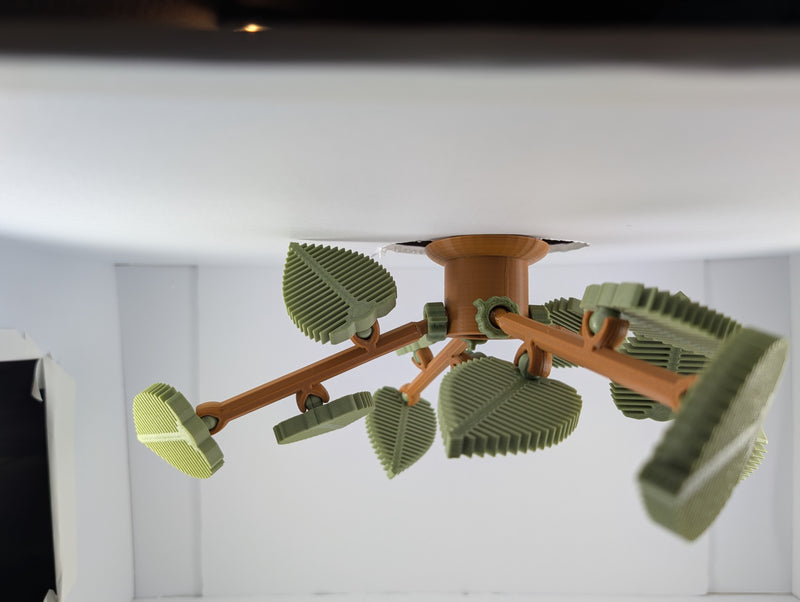
BSFL Starter Kit
BSFL Bin Kit — Black Soldier Fly Larvae Starter Kit
Free US shipping. Bin not included — the kit fits any plastic storage tote you already own. Build your bin your way....
$59.95
In stock
BSFL Breeding Equipment
BSFL Coop — Black Soldier Fly Egg Collection System
When we started farming Black Soldier Flies, we found that egg collection can be a bit annoying, there was not an eff...
$99.99
